


BLOG DETAILS
"Why Your E-commerce Checkout Is Your Biggest Engineering Problem, Not Your Biggest Marketing One"
Home Blog
Blog
Blog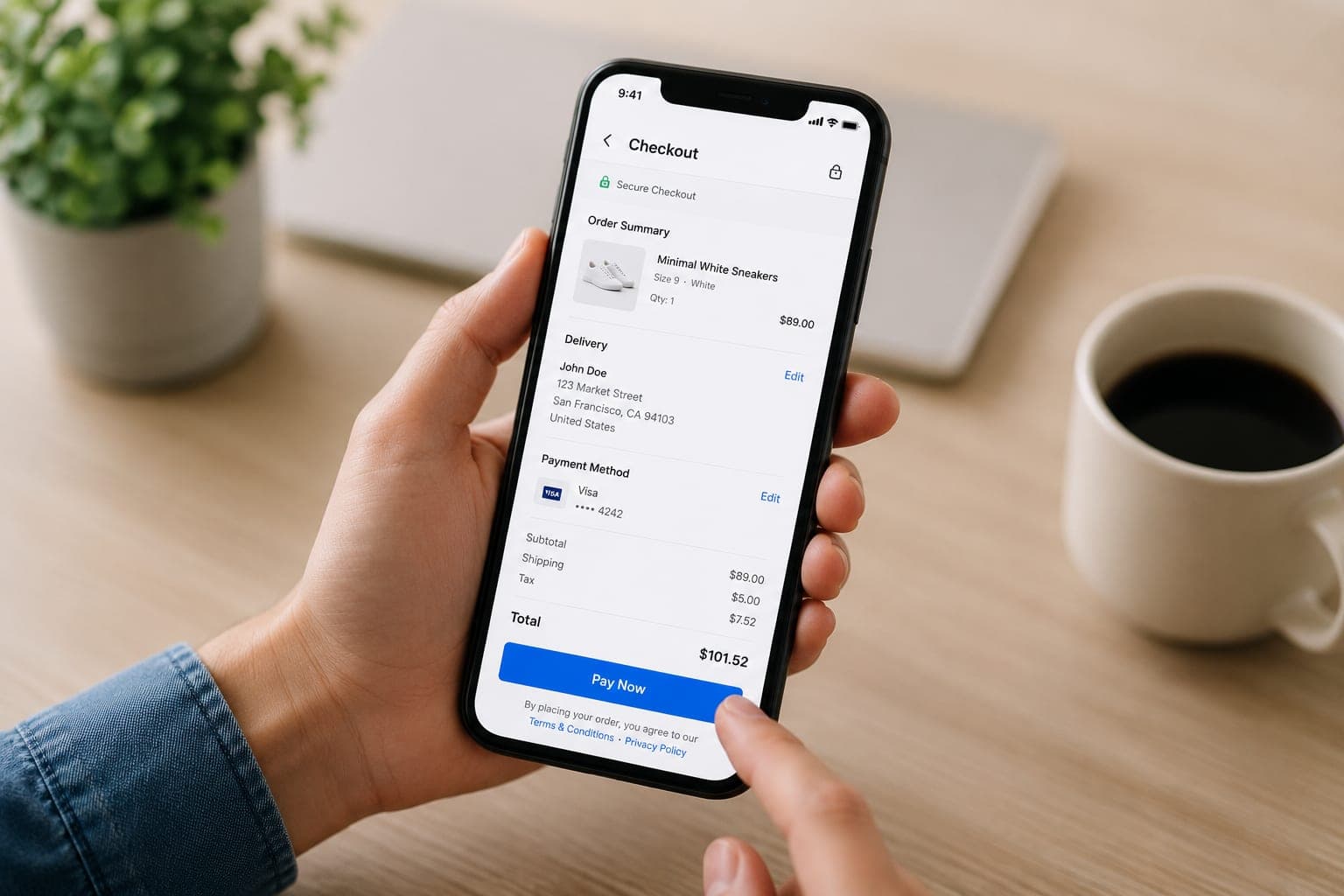
Experience & Commerce
Why Your E-commerce Checkout Is Your Biggest Engineering Problem, Not Your Biggest Marketing One
Seventy percent of shopping carts get abandoned before purchase. That number has held almost perfectly steady for over a decade, improving by roughly 0.3 percentage points a year despite a decade of checkout technology investment across the industry. The natural conclusion most teams draw is that abandonment is just buyer psychology, people window shopping, comparing prices, not ready to commit. Some of it is. The data on why people actually abandon says a meaningful share of it is something else entirely: a checkout your engineering team built, and can fix.
The reasons that are actually solvable
Baymard Institute's research, built from a decade of large-scale checkout usability testing, ranks the causes of abandonment, and the picture is more actionable than "people change their minds."
Unexpected costs revealed at checkout is the single largest fixable cause, cited by roughly 48% of shoppers who abandon. Shipping fees, taxes, and other charges that only appear once a customer reaches the final screen create a moment of distrust at exactly the point a purchase should be closing, not stalling.
A too long or complicated checkout process accounts for 18% of abandonments. Baymard's testing shows an ideal checkout flow needs as few as 12 to 14 form elements, sometimes 7 to 8 form fields. Most checkouts in production carry far more than that, and the gap between what's necessary and what's actually shown to users is, in Baymard's own estimate, recoverable through a 20% to 60% reduction in form elements on the default flow.
Forced account creation drives roughly 24% of abandonments on its own. Customers want a fast, low-commitment transaction, not a new account to manage. Guest checkout addresses this directly and is one of the highest-leverage single changes a checkout can make.
The mobile gap that is now the primary problem
Mobile commerce represents over 70% of e-commerce traffic, and mobile cart abandonment runs 12 to 16 percentage points above desktop, depending on the source. That gap is driven by three specific, fixable causes: form fields with small tap targets and no autofill, the absence of one-tap payment options like Apple Pay or Google Pay, and page load times above three seconds, where Google and Deloitte research shows each additional second of load time adds roughly 7% to abandonment.
Since mobile is the majority of traffic and converts at roughly half the desktop rate even when it does complete, this is the single highest-leverage place to point engineering effort right now for most e-commerce teams, ahead of almost any other checkout improvement.
What the actual dollar opportunity looks like
Baymard Institute estimates $260 billion in US and EU e-commerce sales is recoverable solely through better checkout usability, calculated across the checkout flows of major sites the institute has tested over ten years, including Walmart, Amazon, Wayfair, and others most teams would assume already have this solved. The combined impact of guest checkout, reduced form fields, and transparent shipping costs typically reduces abandonment by 25% to 35%, which Baymard and multiple industry analyses agree is the highest-ROI intervention available in the checkout flow, ahead of cart recovery campaigns, ahead of personalization, ahead of almost anything else a growth team might propose instead.
Why this is an engineering conversation, not a marketing one
Cart recovery emails, SMS sequences, and retargeting ads are real and they work, recovering a meaningful share of abandoned carts. But Baymard's data makes an important distinction: the reasons people abandon split into two categories, friction causes and behavioral causes, and only the behavioral causes, comparison shopping, genuine distraction, respond to marketing-side recovery tactics. A twelve-dollar shipping surprise that caused the abandonment is still twelve dollars when the recovery email lands. No discount code fixes a structural trust problem at checkout.
This means the sequence matters: fix checkout friction first, because that is the larger, more fixable share of the problem, and only then layer recovery campaigns on top to catch the smaller pool of shoppers who were genuinely comparing or got distracted, not blocked.
What this means for your next checkout review
Three checks reveal more than a full redesign would.
Count your actual checkout form fields against Baymard's 12 to 14 element benchmark. If you are meaningfully above that, you have already found your highest-leverage fix before changing anything else.
Show total cost, including shipping and tax, before the final checkout screen, not on it. This single change has been measured to reduce abandonment by roughly 15% on its own.
Check your mobile page load time specifically, not your desktop time. If it is above three seconds, that is very likely costing more conversion than any other single factor on this list, given that mobile is the majority of your traffic.
The checkout flow is rarely the part of the product that gets design attention after launch. The data says it should be near the top of that list, because unlike most growth levers, the fix here is largely structural, largely engineering work, and largely already mapped out by a decade of usability research that most teams have simply never applied to their own flow.


